Research involving children carries a special responsibility—not only in terms of scientific accuracy but also in ensuring the full protection of the rights, dignity, and well-being of every child. That is precisely why the Ethical Code of Research with and about Children in Bosnia and Herzegovina (hereinafter: the Code) is a key document that defines the rules, procedures, and responsibilities of all actors involved in the research process.
Adopted in 2013 by the Council of Ministers of Bosnia and Herzegovina, the Code was created in response to the need to prevent potential abuses and violations of children’s rights in the context of unregulated data collection. Today, more than a decade later, we present its revised edition—enhanced, more precise, and more inclusive.
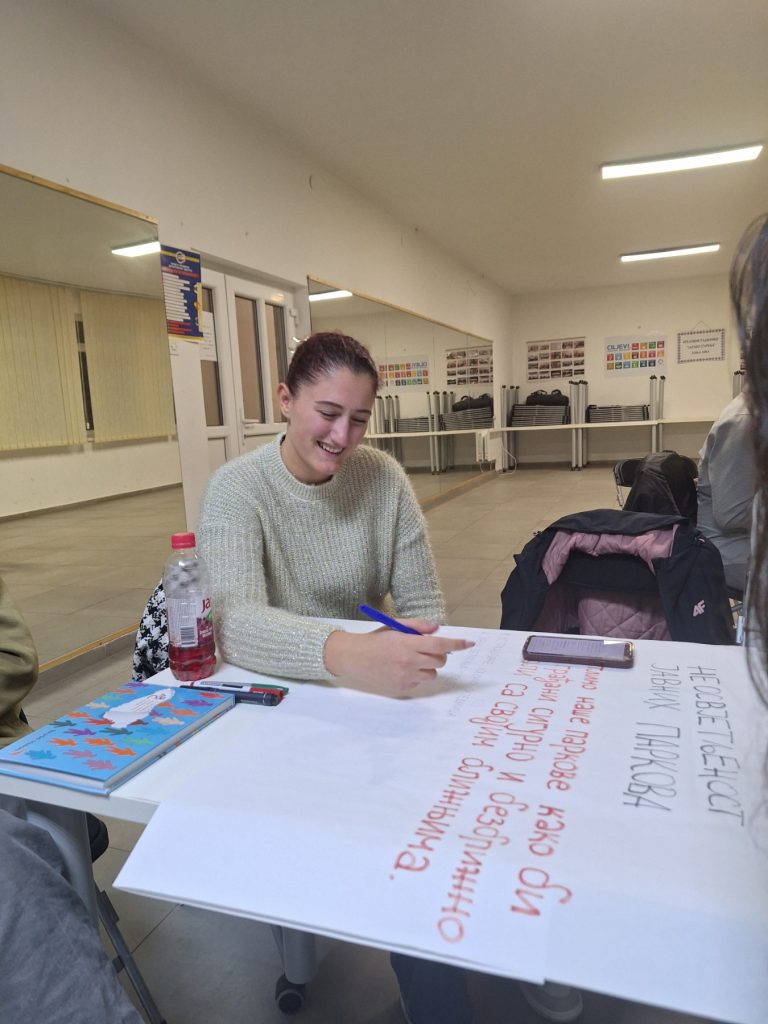
The author of the Code, professor Elmedin Muratbegović, PhD in collaboration with numerous experts, institutions, and children and youth, led the consultation and revision process that resulted in a document that not only protects children but actively includes them. It is especially worth noting that a child-friendly version of the Code—entirely created by children and youth during two days of consultations—will be an integral part of this edition.
Recognizing the crucial role of children in research, as well as the need for their protection at every step of the process, we spoke with professor Muratbegović PhD, an expert with extensive experience in the field of child protection from all forms of abuse. Below is the interview in which we discuss the importance of the Code, challenges in its implementation, and the role of children as active participants in the research process.
What are the key reasons for revising the first edition of the Code?
In addition to the fact that certain provisions of the first edition of the Code had become outdated, the revision was also necessary due to changes in the social, legal, and research context in Bosnia and Herzegovina. This created a need for a different approach to protect the integrity of children who are participating in various researches in BiH. The new Code addresses the challenges of the digital age, includes more precisely defined child protection procedures, and introduces innovations such as a child-friendly version of the Code, created by children themselves. Furthermore, the revised document is aligned with international standards and practices, and encompasses a broader range of research disciplines and methods, including online and intervention-based research. The revision process was participatory, involving experts, institutions, and children themselves, which further strengthened its relevance and applicability.
In what way has the protection of children’s rights and well-being in research been improved in the new, revised edition?
I believe that the new version of the Code has thoroughly addressed the challenges that may arise in the process of conducting research with and about children. The revised Code introduces clear mechanisms for child protectiat all stages of research – from informed consent, through psychosocial support in case of discomfort, to the obligation to terminate the research if the child’s well-being is found to be at risk. Special emphasis is placed on the protection of vulnerable groups of children, as well as on the obligation to pseudonymize and destroy personal data in order to preserve privacy.
What are the key responsibilities of researchers when it comes to protecting children during the preparation and implementation of research, as well as after the research has been completed?
The responsibilities of researchers are thoroughly elaborated – they include the obligation to obtain consent from relevant institutions and parents/guardians, to adapt the methodology to the child’s age, to ensure emotional safety, and to report findings in a child-friendly manner. The researcher must store data in a way that protects privacy and submit the report to the competent authorities. In other words, the researcher’s responsibility is clear, as the Code precisely prescribes monitoring of the researcher’s work at all stages of the research process.
What is your recommendation for ensuring that the views of children and youth are respected during research, especially when working with younger children or children from vulnerable groups?
The new version of the Code, through its recommendations, largely articulates or opens the possibility for children’s views to be expressed in research, including the right to withdraw at any time. Respecting children’s views must be proportional to their age and maturity, and researchers are obliged to create an environment that enables free expression without fear of consequences.
What should researchers do if they discover that a child is at risk during the research?
The Code clearly states that researchers are required to immediately inform the parents/guardians and responsible persons at the school, and to take measures to protect the child, including terminating the research if the negative effects cannot be mitigated.
What is the role of experts from pedagogical institutes and ministries in the process of preparing, implementing, and monitoring research?
The Code provides for the establishment of special Ethics Committees within Pedagogical Institutes, responsible for overseeing the application of the Code’s provisions. These committees, composed of professionals from relevant institutions, review research requests, issue positive or negative opinions, and may request revisions or additional information. Their role also includes assessing the competence of researchers, particularly in multidisciplinary studies, as well as monitoring reports on conducted research. Additionally, competent institutions maintain records of all submitted and approved research requests, thereby ensuring transparency and accountability in the application of the Code.
How is the implementation of the Code monitored in practice, and what happens in case of its violations?
Currently, the situation is very poor. The provisions of the Code are implemented sporadically and inconsistently across different parts of Bosnia and Herzegovina.
How could an electronic research library contribute to transparency and prevent duplication of research, especially among students and young researchers?
This would be a truly transformative and revolutionary step. An online platform would greatly facilitate the work of everyone who are conducting research with and about children. Managed by the Ministry for Human Rights and Refugees of BiH, this platform would provide public access to all researches involving children, thereby ensuring transparency, promoting knowledge exchange, and preventing duplication of research efforts. It would be particularly beneficial for students and young researchers, as it would allow them to review existing studies, methodologies, and findings—ultimately improving the quality of new research and encouraging innovative approaches.
The revised version of the Code was developed during the implementation of the project “Connecting the Dots 2.0 – Advancing Child Participation in Decision Making for Enhanced Child Rights and Democracy in Bosnia and Herzegovina” funded by the European Union and implemented by World Vision BH Foundation and the association Naša djeca Sarajevo, in cooperation with the Ministry for Human Rights and Refugees of BiH.
The content of the interview does not necessarily represent the views, stances and opinions of the European Union. Its contents are the sole responsibility of World Vision BH Foundation and Association Nasa djeca.